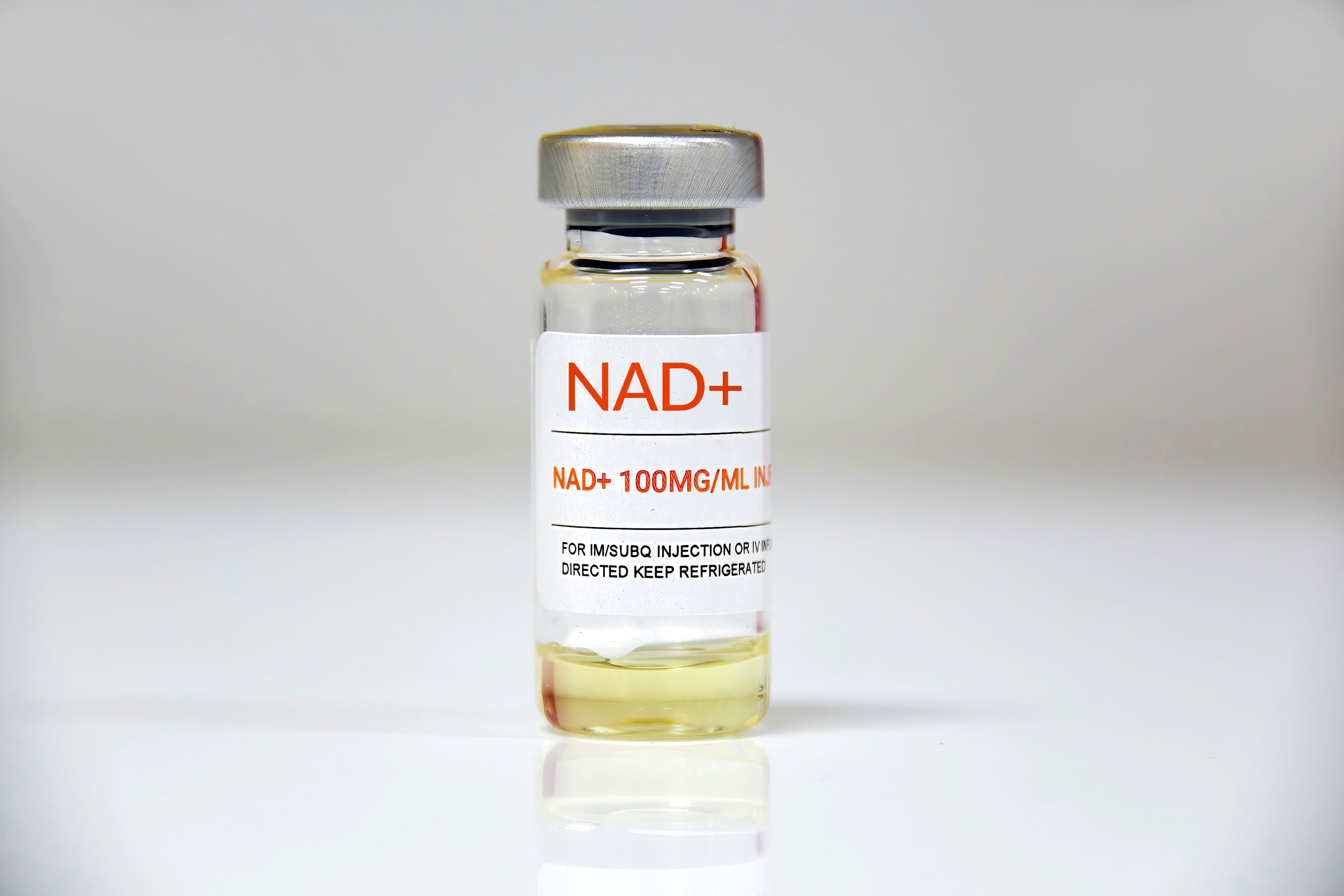
If you've been researching NAD+ therapy for more than a few minutes, you've probably noticed there are two approaches that come up repeatedly: traditional IV infusions and NAD+ injections.
People often assume the decision comes down to which one works better. That isn't necessarily the right question.
For most patients, the comparison is much more practical. How much time does each treatment require? Which one fits your schedule? Do you prefer visiting a clinic or managing treatment from home? Those are usually the questions that end up driving the decision.
The good news is that both options remain available. Understanding the differences makes it much easier to choose the approach that fits your lifestyle and treatment goals.
Two Different Ways to Receive NAD+ Therapy
Although both treatments involve NAD+, the patient experience is very different from beginning to end.
Traditional IV therapy delivers NAD+ through an intravenous infusion in a clinical setting. NAD+ injections are typically administered at home after clinician evaluation and prescription approval when appropriate.
Neither approach is automatically the better choice. They simply solve the same problem in different ways. When comparing NAD therapy vs NAD injections, it helps to understand how each treatment fits into everyday life rather than focusing on one feature in isolation.
What a Traditional NAD IV Appointment Looks Like
For someone who has never received an NAD+ infusion before, the experience is usually straightforward but time intensive. Patients schedule an appointment, travel to the clinic, complete any required intake procedures, and receive the infusion under the supervision of healthcare professionals. Because NAD+ is often administered slowly, appointments may last several hours.
A typical IV treatment involves the following steps:
- Scheduling an appointment at the clinic.
- Traveling to the treatment location.
- Clinical check-in and intake procedures.
- Placement of the intravenous line.
- Monitoring throughout the infusion.
- Returning home following treatment completion.
Some patients enjoy this environment because healthcare professionals are present throughout the appointment. Others find the time commitment difficult to maintain consistently over several months.
How NAD+ Injections Differ
The injection process is built around convenience rather than clinic visits. After completing a clinician-guided evaluation and receiving a prescription when medically appropriate, patients generally receive their medication by mail and administer treatment at home according to their prescribed schedule.
A typical injection program often includes:
- Clinician review and medical history evaluation.
- Prescription approval when medically appropriate.
- Pharmacy fulfillment and preparation.
- Home delivery of prescribed medication.
- Self-administration following clinician instructions.
Although learning something new can feel intimidating at first, many patients find the process becomes routine after the first few treatments. Instead of planning an afternoon around an infusion appointment, treatment becomes something that fits into an existing routine.
Time Is Often the Biggest Difference
When people first compare treatments, they usually focus on the medication itself. After speaking with patients who have experienced both options, another difference tends to stand out much more quickly: time.
Every IV appointment requires scheduling, travel, and several hours set aside for treatment. Injections remove much of that commitment by allowing patients to administer treatment at home. Looking at the two approaches side by side makes the contrast easier to see.
- Scheduled clinical appointments
- Travel to the clinic required
- Several hours per infusion session
- Fixed treatment times
- In-person administration only
- Treatment administered at home
- Flexible scheduling
- Short administration time
- No routine travel required
- Fits into existing daily routines
Neither approach is right for everyone, but the difference in time commitment often becomes one of the biggest deciding factors for patients balancing treatment with professional and personal responsibilities.
Convenience Is Not Just About Saving Time
For long-term wellness programs, convenience often determines whether someone can realistically remain consistent with treatment.
PBBG Healthcare AnalysisPeople sometimes dismiss convenience as a luxury. For long-term wellness programs, however, convenience often determines whether someone can realistically remain consistent with treatment. A therapy that fits comfortably into an existing schedule may be easier to continue than one requiring repeated travel and lengthy appointments.
That doesn't mean convenience should outweigh medical considerations. Instead, it should be viewed as one part of the overall comparison alongside clinician oversight, treatment preferences, and personal lifestyle.
Medical Oversight Exists in Both Models
One common misconception is that injections somehow involve less medical supervision because treatment happens at home. That generally isn't the case with reputable providers.
Whether a patient chooses IV therapy or injections, clinician-guided care remains an important part of the treatment process. Healthcare professionals review medical history, determine whether treatment may be appropriate, recommend dosing, and provide ongoing guidance when needed.
A clinician-guided program typically includes:
- Medical history evaluation and review.
- Assessment of current medications and interactions.
- Individualized treatment recommendations.
- Prescription approval when clinically appropriate.
- Continued communication with healthcare professionals.
- Follow-up evaluations as needed.
The location of treatment may change, but the importance of medical oversight does not.
Comparing the Overall Experience
After looking at both treatment options, it becomes clear that the comparison is about much more than how NAD+ enters the body. The day-to-day experience is different. One treatment is built around scheduled clinic visits, while the other is designed to fit into an existing routine. Neither approach is inherently better, but they ask different things from the patient.
When deciding between the two, consider factors such as:
Looking at these practical considerations often makes the decision easier than trying to compare treatments based on a single feature.
Which Patients May Prefer IV Therapy?
There are good reasons why IV therapy continues to be offered by many clinics. Some people simply enjoy receiving treatment in a clinical environment. Others appreciate having healthcare professionals present throughout the appointment and prefer not to administer injections themselves.
For these individuals, the additional time commitment may be well worth the peace of mind that comes from receiving treatment in a supervised clinical setting.
Which Patients May Prefer NAD+ Injections?
For many people, flexibility becomes the deciding factor. Work schedules, travel, family responsibilities, and other commitments can make repeated clinic visits difficult to maintain. At-home injections offer a different experience by allowing treatment to become part of an existing routine rather than something that requires planning an entire day around an appointment.
Convenience alone should never determine a medical decision, but it can become an important consideration when treatment is expected to continue over an extended period.
Cost Is Only One Piece of the Decision
It is natural to compare prices when evaluating treatment options. At the same time, cost should be viewed within the context of everything each approach includes. An IV appointment involves clinical staff, infusion equipment, treatment space, and several hours of supervised care. An at-home injection program typically emphasizes clinician oversight, prescription management, pharmacy preparation, and home delivery.
Instead of asking which option is less expensive, it often makes more sense to ask which option provides the greatest overall value based on your own circumstances. That perspective usually leads to a more balanced and realistic comparison.
Choosing a Provider Regardless of Treatment Type
Whether you ultimately decide on IV therapy or injections, selecting a reputable provider remains one of the most important decisions you'll make. The treatment experience depends on much more than the medication. Clear communication, clinician involvement, reliable pharmacy practices, and transparent treatment procedures all contribute to the quality of care.
When evaluating providers, consider asking about:
- Clinician oversight structure throughout treatment.
- Prescription review and approval procedures.
- Pharmacy partnerships and preparation standards.
- Ongoing patient communication and support.
- Follow-up care and evaluation processes.
- Overall treatment philosophy and patient experience.
One example is the opportunity to buy NAD injections through a clinician-guided telehealth provider such as AgelessRx. The company's NAD+ program illustrates how telehealth can combine clinician review, individualized treatment plans, prescription management, and pharmacy fulfillment within a structured medical process — demonstrating that at-home treatment can still maintain appropriate clinical oversight.
Explore NAD+ Injections Through a Trusted Telehealth Provider
AgelessRx offers a clinician-reviewed NAD+ injection program with personalized treatment plans, pharmacy fulfillment, and ongoing medical support — from the comfort of your home.
Learn More at AgelessRxThere Is No Universal Right Answer
One thing becomes clear after comparing both treatment options: patients often arrive at different conclusions for perfectly valid reasons. Someone who enjoys the structure of clinic visits may continue choosing IV therapy for years. Another person with a demanding career may decide that at-home injections fit their lifestyle much better. Neither choice is inherently right or wrong — personal preferences, schedules, and treatment goals vary considerably.
The best decision is usually the one that supports consistency while fitting comfortably into everyday life.
Final Thoughts
The discussion around NAD injections vs IV therapy often focuses on finding a winner. A better approach is understanding that each option offers a different treatment experience.
Traditional IV therapy provides in-person administration within a clinical environment, while injections emphasize flexibility and convenience without necessarily giving up clinician-guided care. When comparing NAD therapy vs NAD injections, think beyond the medication itself. Consider the time commitment, your lifestyle, how you prefer receiving care, and the level of flexibility you want over the coming months.
Taking all of those factors into account may help you choose the treatment approach that best supports your long-term wellness goals.